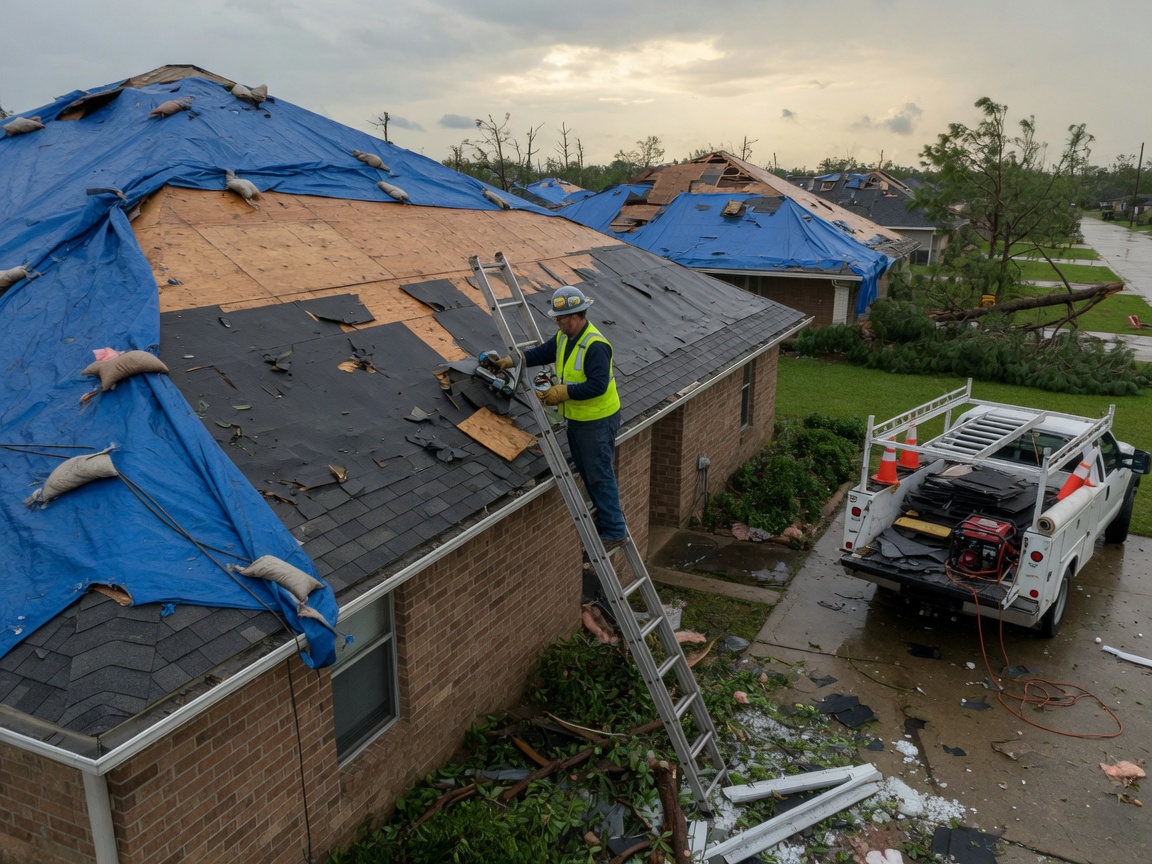
Beaumont's hot humid subtropical climate brings repeated thunderstorms that drive wind-driven rain under shingles and flashing on older homes common in Old Town and Downtown Beaumont. These properties often feature aging asphalt shingles or metal panels installed decades ago, where even moderate winds can lift edges and allow water into the decking. Crews must check for delamination along seams and inspect attic spaces for hidden saturation before any surface fixes begin.
Hurricane season adds the need for temporary stabilization on homes in West End and South Park before full repairs. High humidity slows drying of soaked insulation and sheathing, raising the risk of mold growth within days if ventilation is not restored. Work in these neighborhoods frequently involves coordinating with local permitting for structural tie-downs and using corrosion-resistant fasteners suited to the salty air that reaches from Port Arthur and Orange.
Hidden Moisture Risks After Storms
Older homes in Calder Highlands sit on slightly lower ground that collects runoff during heavy rains. Storm damage repair here requires pulling back interior ceilings in some cases to confirm no water has traveled along rafters into wall cavities. Skipping this step leaves homeowners dealing with recurring leaks months later when humidity spikes again.
Material Choices for Local Conditions
Repairs in Beaumont commonly use synthetic underlayment rated for high wind exposure rather than standard felt, because afternoon thunderstorms can produce gusts that exceed 50 mph. Flashing around chimneys and skylights is replaced with pre-formed aluminum pieces sealed with polyurethane caulk formulated for constant moisture rather than basic asphalt products.
Technician insight
In Beaumont, the thing that catches most people out with Storm Damage Repair is how quickly humidity in Jefferson County turns a small wind-driven leak into widespread attic mold inside the older frame homes common in Calder Highlands and near the Beaumont Botanical Gardens. Homeowners often focus only on visible shingles while missing the moisture that travels along rafters during repeated afternoon thunderstorms.
Thunderstorm Damage in South Park
Heavy winds during a summer storm lifted shingles on a 1970s home near Lamar University. Inspection revealed water had reached the decking and soaked insulation along one rafter run. Crews removed the wet materials, installed new underlayment and shingles with upgraded fasteners, then restored attic ventilation to prevent mold.
Storm Damage Repair Services We Offer
✓Emergency Roof Tarping
Secure temporary tarps over storm-torn sections to prevent further water entry until permanent repairs can be scheduled in neighborhoods like South Park.
✓Wind Lifted Shingle Repair
Re-secure or replace shingles loosened by thunderstorm gusts, focusing on edges and ridges where wind-driven rain most often penetrates older Beaumont roofs.
✓Hail Impact Assessment
Examine granule loss and dent patterns on asphalt shingles after hail events common in Jefferson County, then document damage for insurance purposes.
✓Flashing and Sealant Replacement
Replace corroded or displaced flashing around vents and valleys that failed during high winds, using materials suited to Beaumont's humid coastal air.
✓Attic Moisture Extraction
Remove saturated insulation and promote drying in attics where storm water has entered, reducing mold risk in the high-humidity environment around Lamar University.
How it works
- 1
Site Assessment
Walk the roof and attic to locate all entry points from wind or hail, noting any compromised decking on homes in Old Town or West End.
- 2
Temporary Stabilization
Install tarps or bracing where needed to stop active leaking before permanent work begins.
- 3
Material Removal and Replacement
Strip damaged sections, replace underlayment and shingles with wind-rated products, and reseal all penetrations.
- 4
Final Water Test and Cleanup
Run controlled water over repaired areas and remove debris from gutters and yards.
Pricing
Cost depends on roof size, extent of hidden damage, and material upgrades required; discussed during Mon–Fri 8am–6pm, Sat 9am–2pm.